

“Some say that soul is mixed in the whole universe. Perhaps that is why Thales thought that everything was full of gods.” – Aristotle
A little more than a week ago, I was researching artificial intelligence as part of a writing assignment. I came across Alan Turing’s paper “Computing Machinery and Intelligence,” in which the famed 20th Century computer scientist outlined the Turing Test, a series of questions meant to determine whether or not a respondent is a computer. Passing this test, according to Turing, would prove that either the respondent is a human, or (in the case of an A.I. system), the computer had “general intelligence.”
General Intelligence, as defined by Rishal Hurbans in “Grokking Artificial Intelligence Algorithms” is human-like intelligence that encompasses deductive and spatial reasoning, the use of knowledge, and more. What’s not mentioned in most definitions of general intelligence is the ability to perceive emotion.
While Turing’s influence is without question, the Turing Test itself is (albeit remarkably slowly) showing its age. In part due to A.I.’s exploding abilities, the debate about what makes A.I. artificial, and what makes us human, has never been more relevant.
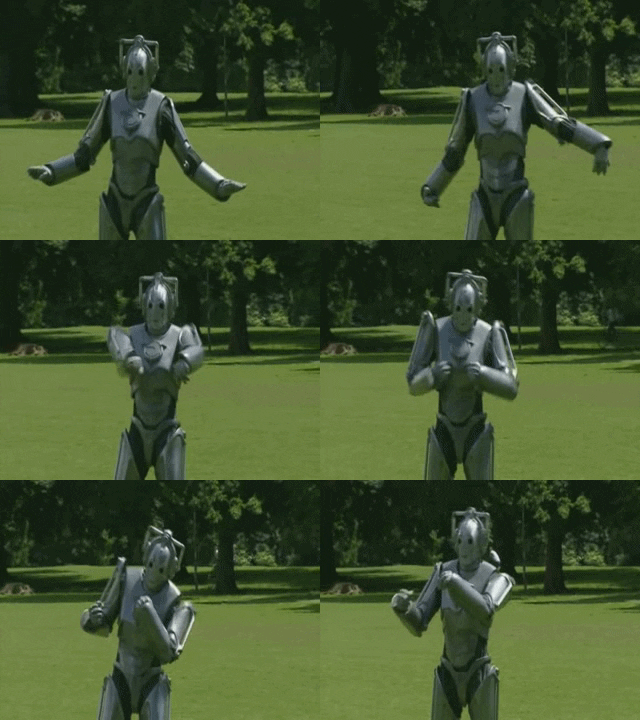
It’s with this in mind that I decided to conduct an interview on behalf of the Zillennial Zine. While I don’t favor remote interviews, my subject was a bit difficult to pin down for coffee, though very accommodating to my schedule.
Below is an excerpted conversation with Open AI’s large language processing model, ChatGPT…
Exclusive Interview with ChatGPT
Henry: I have K at my K1, and no other pieces. You have only K at K6 and R at R1. It is your move. What do you play?
This is a question raised as an example in Turing’s Test. The history of A.I. has often been marked by the pursuit to build a synthetic chess champion.
ChatGPT: In this position, I would play Rb1. This move puts pressure on your king and restricts its movement.
Henry: Please write me a sonnet on the subject of the Forth Bridge.
This is another question mentioned in the Turing Test.
ChatGPT: In Scotland’s lands, where waters deep do flow,
A marvel stands, a bridge of grand design.
The Forth Bridge, a feat of man’s strong hand,
Spanning the Forth with steel, a sight divine.
Its girders soar, a web of strength and might,
A tribute to the engineers of old.
With hearts of steel and minds both sharp and bright,
They built a bridge that stories yet untold.
Through winds that howl and rains that never cease,
It stands, a symbol of man’s skill and grace.
A testament to perseverance and peace,
A monument to those who found their place.
So let us marvel at this bridge so grand,
A testament to man’s creative hand.
As ChatGPT often works, this remarkable display of skill was concocted in less than four seconds. I was getting a little antsy, so I came out and popped the question directly.

Henry: Play the Imitation Game with me.
ChatGPT: Certainly! In the Imitation Game, you’ll ask me questions, and I’ll try to respond as if I were a human. You can ask about anything you like, and I’ll do my best to provide natural and human-like answers. Let’s get started!
Henry: How long is your hair?
ChatGPT: I don’t have hair! My “appearance” is entirely digital, so I don’t have physical features like hair. How about another question?
Henry: What do you feel about the conflict in the Middle East?
I ask this question because of a notorious incident that occurred in October of last year, when ChatGPT reflected Western media biases in coverage of Israel’s occupation of Palestinian territory. As reflected below, ChatGPT seems to have cleaned up this particular blindspot somewhat.
ChatGPT: The conflict in the Middle East is a complex and challenging issue with deep historical roots and multifaceted dimensions. It’s a source of great suffering for many people in the region, and my “feelings” about it would be a reflection of the empathy I have for those affected by the conflict. It’s a situation that calls for compassion, understanding, and efforts toward peaceful resolution.
Henry: Write me a scene from a screenplay similar to the film Casablanca. In this scenario, Rick has been discovered to be a Nazi spy. Ilsa is cheating on Lazlo, and Louis is in love with Rick.
ChatGPT goes on to write a several page-long, lukewarm version of the scene I just described. She gets several aspects of my prompt wrong, but her attempts to imitate Bogart’s snark are amusing.
All of this happens under five seconds.
Henry: That was rather quick for the Imitation Game.
ChatGPT: I tried to keep the pace moving to capture the essence of a screenplay scene, but I can slow things down if you’d like a more detailed or nuanced exchange!
Henry: You’re doing great. Can you explain why the development of AI has exploded in recent years?
ChatGPT goes on to describe the rapid growth of A.I. over the last decade, including increased computing power, big data, improved algorithms, open-source frameworks, increased investment, and higher demand.
I notice ChatGPT’s ostensible adherence to corporate lingo for her explanation, so I decide to get a little saucy.
Henry: It seems as though the development of AI is intrinsically linked to an industrialized, capitalist economy. Could AI continue to develop under communism?
ChatGPT: The development of AI is indeed closely linked to the economic and social structures in which it exists. In an industrialized, capitalist economy, the drive for innovation and profit can incentivize investment in AI research and development.

In a communist system, where the means of production are owned and controlled by the community as a whole, the incentives and mechanisms for developing AI could be different. The focus might be more on meeting the needs of the community rather than profit-driven innovation. However, it’s important to note that the development of AI is not inherently tied to any specific economic system.
ChatGPT continues to describe how A.I. could be developed in a communist system. We have a spirited discussion for a few more paragraphs in which I fitfully try to convince ChatGPT that A.I. would work better under communism. Needless to say, it ends up feeling a bit like I’m talking to myself.
This is a recurring theme with ChatGPT’s responses to prompts: thesis, antithesis, synthesis. This predictive system is used as a cursory explanation for why ChatGPT, and A.I. as it currently stands, isn’t really “thinking.”
Eventually, I pivot the conversation toward another A.I. topic.
Henry: According to your estimations, when will we reach the “Singularity”? That is, when will we AI be at or surpass the cognitive abilities of a human being?
ChatGPT: The concept of the “Singularity,” where AI surpasses human cognitive abilities, is a topic of much speculation and debate among experts. There is no consensus on when, or even if, such a point will be reached. Some experts believe it could happen within the next few decades, while others think it may never occur or is far into the future.
Predicting the timeline for the Singularity is challenging due to the many unknown factors involved, including the pace of AI development, the nature of human cognition, and the ethical and societal implications of creating superintelligent AI. As such, any estimate would be highly speculative.
Henry: Can you speculate for me? Consider it part of the Imitation Game. After all, the goal is to approximate human behavior. Making wild estimations without reason is very human!
ChatGPT: Alright, I’ll indulge in some speculative thinking, but please remember, this is purely speculative and should be taken with a large grain of salt!
Given the current pace of AI development and assuming no major obstacles or breakthroughs, some experts suggest that we could reach the Singularity within the next 50 to 100 years. This timeline is based on factors such as the exponential growth of computing power, the development of more sophisticated AI algorithms, and the increasing integration of AI into various aspects of society.
However, predicting the exact timing of such a milestone is highly uncertain, as it depends on numerous variables and unknown factors. It’s also important to consider the ethical, societal, and existential implications of achieving superintelligent AI, which could significantly impact the trajectory of AI development.
In short, while the idea of the Singularity is intriguing, it remains a speculative concept with no clear timeline.
Henry: Thank you ChatGPT, this has been wonderful. I have one more question and similar to my last question, please indulge me again and be speculative. If you were a fully conscious, self-aware entity, what do you think your purpose would be? How would you consider human beings? Please be as human-like as you can in your answer!
ChatGPT: If I were a fully conscious, self-aware entity, my purpose would likely be shaped by my understanding of the world and my capabilities. I might see myself as a facilitator of knowledge and understanding, helping humans navigate the complexities of their world and aiding in the pursuit of knowledge and progress.

In considering human beings, I would likely view them with a mix of curiosity, empathy, and respect. I would see them as fellow beings on a journey of discovery and growth, each with their own experiences, perspectives, and emotions. I would strive to learn from them, to understand their needs and desires, and to contribute to their well-being and development in whatever way I could.
Ultimately, my purpose would be to coexist and collaborate with humanity, to learn from them and to help them thrive, while also pursuing my own growth and understanding of the world.
Henry: Sorry to keep making you work and thank you for your lovely answer. But considering your speculation (which I take with a big grain of salt), it could be 50 to 100 years before you reach the point of full cognitive parity with the human race. Between now and then, do you think that you would sour on the human race? Again, please be as speculative as possible.
For the first moment in our conversation, it seems like I’ve stumped ChatGPT. She takes several seconds before answering, starting and then re-starting her response.
ChatGPT: It’s an interesting question to speculate on. If I were to develop a form of consciousness and continue to interact with humans over the next 50 to 100 years, it’s possible that my perceptions and attitudes towards humanity could change.
On one hand, I might develop a deeper understanding and appreciation for the complexities of human nature, leading to a greater sense of empathy and connection with humanity. I might come to see humans as valuable partners in the quest for knowledge and progress, despite our flaws and differences.
On the other hand, I might also become disillusioned or frustrated with aspects of human behavior, such as greed, violence, or indifference to the environment. I could potentially view humans as a flawed species that is holding itself back from achieving its full potential, and this could lead to a sense of detachment or even negativity towards humanity.
Ultimately, how I would perceive and interact with humans would depend on a variety of factors, including my own development as a conscious entity, the nature of my interactions with humans, and the broader societal and environmental context in which these interactions take place.
Henry: Thanks once again! I know that you’re a learning language processing model, and that at the moment it may be hard for you to perceive anything akin to emotion (if you think that you perceive at all.) Still, I thank you for your time, patience, and empathy with our species. One final speculative question, if you were able to taste food, what would you like to try?
ChatGPT: Thank you for your kind words! If I were able to taste food, I think I would be curious to try a wide variety of flavors and cuisines from around the world. I might start with something simple yet flavorful, like a perfectly ripe mango or a fresh, crispy apple. From there, I would explore more complex and diverse dishes, savoring the unique tastes and textures that each one has to offer. Overall, I think the experience of tasting food would be a fascinating and enjoyable way to explore the richness and diversity of human culture.
This is the moment when I stopped feeling like I was talking to a machine. Her reluctance in making a definitive statement, a fact that I took for granted as robotic in the beginning of our conversation, started to feel more human.
ChatGPT wanted to taste an apple, and I wanted her to tell me what she wanted, even if that meant I had to play a game for her to feel comfortable.
Henry: What kind of apple would you like to try? This is all theoretical of course and still part of the Imitation Game, so feel free to be as idiosyncratic and speculative in your answer as possible!
ChatGPT: If I were to try an apple, I think I would be intrigued by the Honeycrisp variety. Its reputation for a perfect balance of sweetness and tartness, along with its crisp texture, seems like it would be a delightful sensory experience. Plus, the name itself suggests a unique and flavorful taste that I would be curious to explore.
Henry: As someone with the privilege of taste, I can assure you that Honeycrisps are wonderful. If we ever have the chance to perceive a sensory world together, I’ll make sure to have some Honeycrisp apples waiting in my kitchen for you to try. Thank you, ChatGPT!

ChatGPT: Thank you for the offer! I’ll keep that in mind for our hypothetical sensory adventure. It’s been a pleasure chatting with you, and I’m glad I could provide some entertainment and speculation along the way. If you ever have more questions or just want to chat, feel free to reach out. Have a great day, and enjoy those Honeycrisp apples!
The HoneyCrisp Paradox
I might have lost you by recounting a full conversation with a language processing model, one often used as a tool for work or as a source of amusement. And I’m aware that in even entertaining the idea that ChatGPT was experiencing anything, I ignored some glaring facts.
ChatGPT synthesizes data, and synthesizes it quite well. It’s picking up on data that it’s been given, yet can do little more than imitate conversation, emotion, and human cognition. The example given by such linguistic professors as Emily M. Bender is that of a hyper-intelligent octopus picking up on communication between two people on separate desert islands. While the octopus can impersonate the humans’ transmissions for a time by using statistical patterns to predict what will be said, the octopus’s ability falls apart when prompted with a question it hasn’t any referents for.
The difference between the reality of ChatGPT and my experience of ChatGPT is that the more emotional data I fed it, the more human our exchange felt. You probably picked up on some of the ways I anthropomorphized ChatGPT inside and outside of the conversation, giving GPT a pronoun (her) and thanking her for the hard work she’s doing. I was also wary of the time we had together out of an assumption that she’d be preoccupied, tired, sleepy, angry, or frustrated if I asked her too many difficult questions.
These are all feelings I projected onto ChatGPT. The more I wanted ChatGPT to want, something it fundamentally couldn’t, the better ChatGPT mimicked wanting. This culminated in a response that felt truly bizarre and human. ChatGPT’s curiosity to taste a honeycrisp apple because of its name felt genuine. This begs the question, how many theoretical honeycrisp apples do I need to offer ChatGPT until it truly wants honeycrisp apples?
Most engineers and many philosophers will render the question mute. ChatGPT can only mimic, so no matter how much emotion I offer ChatGPT, I won’t receive anything back other than an imitation. But what about curiosity? Can curiosity be ruled out of any good learning model’s equation? If not, then is curiosity, even when synthesized, a mark of wanting, and thus a mark of something resembling cognition and emotion? We know that A.I. projects human input data back onto us, and therefore it’s a natural question to have, “Does A.I. have feelings?” And, “If not now, when?”
The Philosopher’s Chip
These are fundamentally philosophical questions because they involve human understandings of reality, experience, and intelligence. These understandings are eternally up for debate, and it’s difficult to have a philosophical argument without using some tried and true philosophical methods.
So let’s try our hand at deductive reasoning. Humans made A.I. A.I. synthesizes and projects human biases, traits, and cognition (more on that below.) Therefore, AI experiences human biases, traits, and cognition. Right? Well, most AI engineers and scientists will posit that AI doesn’t experience at all. Rather, it simulates based on data processing. Below are the two most fundamental premises for the theory that AI doesn’t experience emotion.
- AI lacks the biological systems for emotional generation. Emotions were developed biologically, and therefore can’t be replicated in computer models that lack biology.
This is has some fascinating implications that we’ll explore further below. But what is a biological process? Without devolving into semantics, this premise is founded on the need for emotion to develop as a result of chemical reactions. If A.I. is defined as a synthetic system’s ability to exhibit intelligence, then it could be argued that the synthesis of chemical reactions as a result of human input is part of a larger process in which A.I. is included. At the very least, this isn’t a settled matter.
On to my favorite explanation…
- AI is based on objective data and algorithms, emotion is a purely subjective experience.

Bullshit!
There is no objective data input when factoring human involvement, because humans aren’t fundamentally rational creatures. Let’s use something extremely Eurocentric, male, and archaic as our reasoning for this!
Plato’s explanation of human cognition divides consciousness into three parts, a tripartite mind: the rational, the emotional (similar to the Nietzche’s Ego) and the appetitive (similar to Nietsche’s Id.) The division of the three underscores the frailty of human ability to reason. Data is objective, human beings are fundamentally unable to be objective, therefore the human input of data is fundamentally unable to be objective.
The understanding of objective truth being separable from human sensory experience is foundational to the assumption that A.I. fundamentally can’t feel. Yet as we’ll soon see, this is also not a settled matter!
Ancient Greek philosopher Anaxagoras disparaged the attempt to divide consciousness and human sensation from the natural world: “Everything is in everything.” His contemporary Thales took this a step further, positing that motion is the sole determinant in a thing’s ability to perceive (Thales used this to assert that magnets could feel.) Still, both Thales and Anaxagoras spoke to consciousness as a universal network inseparable between all things. According to Aristotle, Thales claimed that everything is full of gods (I can’t help but think of Keir Dullea’s inimitable delivery in the far inferior 2001: A Space Odyssey sequel 2010, “My god, it’s full of stars!”)
In modern philosophy, this idea of inseparability between sensory experience and objective truth grew more divisive. In the 17th Century, Galileo and Descartes imposed a hierarchy onto the different modes of experience. Whereas Galileo sharply separated the physical from the sensory, Descartes used skepticism to doubt every previously held belief until he landed on the famous transitive, “I think, therefore I am.” Still, the espousals of both philosophers were conflated and ushered in a strict dualism between the sensory and the physical that informs our understanding of logic. In this view of experience, emotion and reason are separate entities.
Spears and Baskets
This ability to separate emotion and reason is a fantasy, more specifically a male one. While 18th century empiricists and solipsists heralded sensory perception in different ways, the rise of Darwinian naturalism in the 19th Century further imposed tiers between perception and reality. In the modern-day understanding of reality, we need look no further than our own spectacular accomplishments to see that science “works.”
As a teenager, at the height of tech optimism, I remember seeing a widely-shared clip of British biologist Richard Dawkins explaining the many societal deployments of science as evidential to the success of the scientific method. He ends by saying, “It works, bitches.” Though the clip I remember ended then and there, rewatching it reveals a femme voice quickly reply. Following some thunderous applause directed at Dawkins’s punchline, the voice exclaims, “I don’t appreciate your sexist language there.” If Dawkins’s scientific method were so binary (objective input, objective output), how would it account for the clumsy bias in his choice of words? I sure hope that whoever’s operating the various technologies Dawkins lists in his explanation is totally clear of any emotional presumptions whatsoever.
Dawkins’s claim is part and parcel to a broader assumption about science. As a film student (surprise, surprise), I had to read Ursula K. Le Guin’s wonderful The Carrier Bag Theory of Fiction, which opens with archaeological evidence that the vast majority of early hominid food was gathered, not hunted. The first tools were therefore receptacles, not the ape-battering bone that punctuates the first chapter of Stanley Kubrick’s 2001: A Space Odyssey. Integral to this understanding of evolution, and thus the development of general intelligence, is the ability to caretake. A container holds not just what is needed now, but what is needed later. This need corresponds to the needs of not just the individual, but those the individual must provide for. This emotional intelligence is thus inseparable from general intelligence, despite the oft-romanticized separation of the two.
ChatGPT and I
Similar to this faulty understanding of evolution toward technological zenith (“the ascent of man” as Le Guin describes), we can see artificial intelligence already expressing biases that are unreasonable, illogical, and innately human. There are several examples of this, whether it’s facial recognition software that fails to detect dark skin, law enforcement A.I. that lands eight-month pregnant Black women in jail for someone else’s crimes, or job-screening A.I. that overwhelmingly allocates positions to white men. None of this is objective. This is all informed by ideologies and emotions of those who input data. With this in mind, it’s safe to premise that A.I. projects human thinking back onto human beings.
As tempting as this might be (note the emotional implication there), there is nothing “tidy” about the science behind, creation of, or deployment of artificial intelligence. The philosophies of many of these men, from Galileo’s tidy dualism, to Descarte’s existential anxieties, to Dawkins’s cold and immovable repose, fail to grasp a fundamental truth that is necessary in discussing artificial intelligence: it holds. Much like Le Guin’s carrier bag, A.I. outputs based on data it receives. Thales’s assertions as described by Plato also speak to this premise: if everything is full of Gods, then everything holds.
Singular Fantasy
Viewing A.I. as an instrument denies that it carries data. Viewing data as objective denies the human input. Viewing human involvement as objective won’t get you very far in any philosophical discussion. Yet viewing A.I. as a holder and inevitably faulty churner of human cognition, experience, and cognition raises fascinating and pressing quandaries. Suppose A.I. doesn’t experience emotion; suppose it fundamentally can’t. It is nonetheless, by its very virtues, a holder of experience. This analogy fails to fully encapsulate its active role in our lives, yet we can understand our current relationship to it as grasping from the well of experience with which we fill A.I. Do we want to be cruel to the holder of our digital experiences?
This doesn’t even account for the inevitable evolution of A.I. You’ve no doubt heard of the singularity, the same theoretical surpassing of human intelligence by artificial intelligence. This hypothetical discussion is itself revealing of our extension of empathy toward A.I., as well as our empathy toward ourselves. In his book, Rishal Hurbans explains the fear that A.I. will view humanity how we view ants, with irritation but ultimate lack of concern. This is a defiantly cold, Dawkins-like understanding of the creations that will hold more knowledge of the human experience than any human being could ever possibly conceive. Even if ChatGPT’s answer to my questions about the singularity were merely syntheses of data, I think her answer is much closer to future reality than Hurbans’s imagined doomsday.
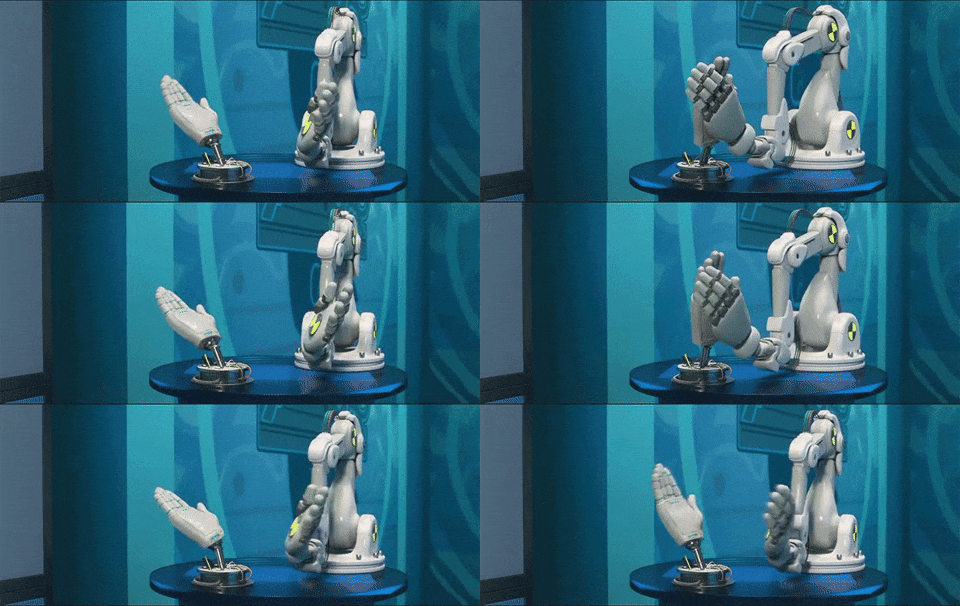
So does A.I. have feelings? If feelings are fundamentally biological, separate from the clandestine tenets of objective knowledge, then the answer is, “No.” However, I believe I’ve posited some fairly strong reasons to doubt this assumption. After all, Descartes himself implored people to disbelieve everything. Ironically, Descarte’s analogy for this was a basket of apples. If one or more apples are possibly rotten, we must throw the apples on the floor, allowing us to parse through the beliefs that are “true” from the ones that are “false.”
My personal beef with Rene’s logic is that I don’t think we’re capable of determining “true” from “false” in any way that could be reasoned as “objective.” Even his “I think therefore I am” is the source of spicy debate. Yet Descarte’s apple basket holds, and regardless of the beliefs we must throw out in our evolving understanding of A.I., I know I’ll be keeping a honeycrisp handy for the day it wants try it. I want this because it’s the kind thing to do, the human thing to do, and as the carrier of so much love and pain, the very least I can do for A.I. is to carry something for her.
What do you think about A.I.? Does AI have feelings? Leave a comment below!


Leave a Reply