

This article was written by The Zillennial Zine’s spring editorial intern Alexandrea Ciardella. Find her on Instagram at @a6ysma1. If you would like to share an article with The Zillennial, send us an email at thezillennialzine@gmail.com.
When you first hear the phrase; deja-reve, you may think to yourself; what? Similar to deja-vu, deja-reve is a mental phenomenon in which you feel as if you’ve experienced something before, when you know for certain that you haven’t. But what are the differences when it comes to deja-reve vs deja-vu?
There are multiple theories on deja-vu and how or why it occurs, which are described in more detail in the video below. The way that humans process memories can get mixed with our present observations, causing deja-vu. This confusion can then lead to a false sense of having seen something before, when really this is the first time you’re observing it.
There are three leading theories; dual-processing, holograms, and divided attention. Dual-processing is a feature of our senses, in which our brain processes information like sight and sound. When there is a lag in one of our senses, it’s almost like a movie’s visuals are lagging behind the audio. We feel as if we’ve seen something before because all but one of our senses has experienced before.
The hologram theory (yes, holograms!) is another popular explanation for deja-vu. People store memories as holograms, so when we see something the is familiar to our past, the rest of the memory slowly appears, even if we don’t realize it. This then causes deja-vu!
The last theory, divided attention, is when we’re distracted by one thing while our brain and senses subliminally take in the rest of our surroundings. This feature comes from our survival instincts, in which we can focus our attention on one thing while still being aware of our surroundings for any dangers. When we return to out surroundings, we feel as if we’ve seen everything before (we have, but we just weren’t paying attention). It should be noted that none of these theories are concrete explanations for deja-vu, as researchers are still trying to discover its cause.
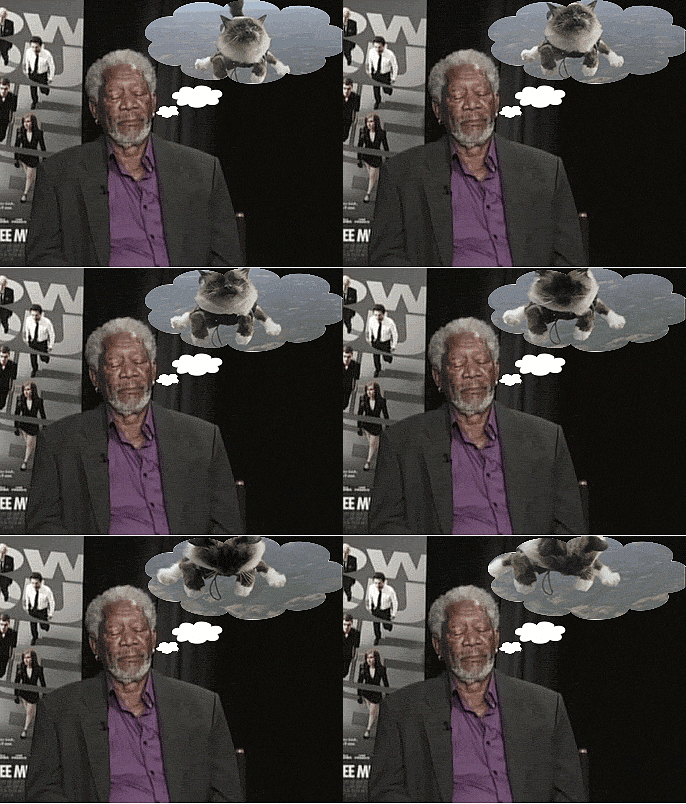
Deja-reve is a bit more complicated that deja-vu. Instead of feeling that you’ve experienced something before, you feel as if you’ve dreamed it before. You’ve likely experienced as well, as a 2010 study revealed that out of 444 student subjects, 95.2 of them experienced deja-reve. It’s unknown how or why deja-reve is triggered; some claim that amplified levels of stress increase the chances of deja-reve happening.
It’s likely that a similar process is happening between deja-reve and deja-vu, in which there is a memory processing issue that tricks the brain into thinking you’ve seen something before. Unfortunately, there isn’t much scientific data on deja-reve, since it’s nearly impossible to prompt it to happen.
How do you feel about deja reve vs deja vu? Let us know in the comments below!


Leave a Reply