

This article was written by The Zillennial Zine’s spring editorial intern Henry Ryeder. Find him on Instagram at @henryryeder. If you would like to share an article with The Zillennial, send us an email at thezillennialzine@gmail.com.
The film Falling Down stars Michael Douglas William Foster, a down-on-his-luck Los Angeles suburbanite who spends a hot summer day traversing the city to visit his estranged daughter. Foster is toward the beginning of his journey when he encounters a group of “gang members” on a hill. Foster claims that he just wants to leave, but the gang members press him, asking for his brief case. In response, Foster rebukes, “I was willing to mind my own business. I was willing to respect your territory and treat you like a man, but you couldn’t leave it alone, could you?”
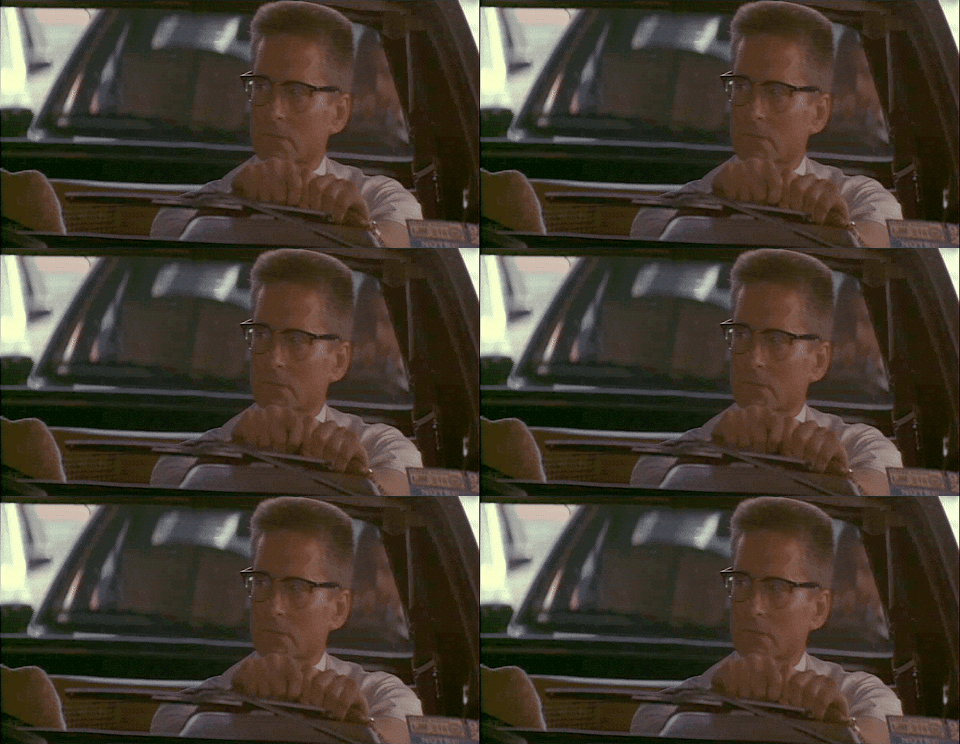
Released in 1993 by Warner Bros., Falling Down shows white masculinity at its most willfully oblivious. Foster is a defense engineer; his nickname is “D-Fens.” Foster spends the film wielding guns on unsuspecting Angelenos, yet its his inner turmoil that the audience is meant to understand.
The 1990’s saw an America ripe for reexamination. Fresh off the fall of the Soviet Union and the advent of the internet, the nation’s visage turned inward. Gender disparities and harassment showed up in the race for the White House, and racial discrimination was videotaped, then translated through celebrity culture in one of the most publicized criminal trials in history. The rapid speed at which the national dialogue seemed to be drifting “leftward” inspired films like Falling Down. In an America that no longer serves the interest of the White man, why should the White man respect any of the fabricated social mores it imposes?
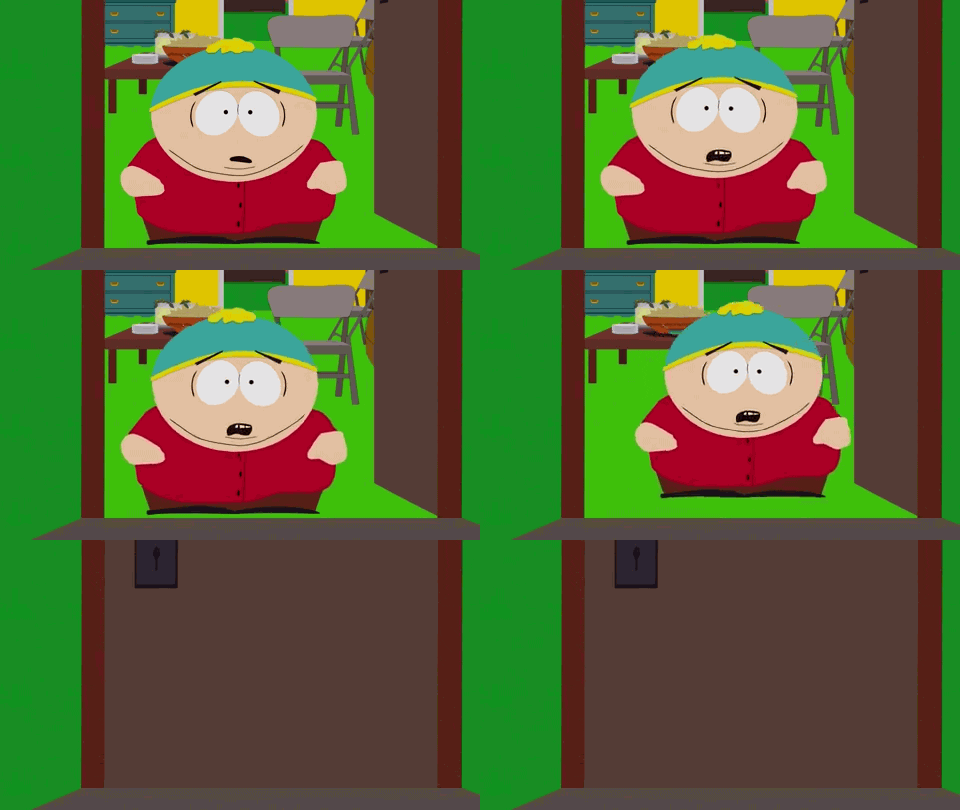
Trey Parker and Matt Stone aren’t Joel Schumacher; they’re fantastically talented writers and creators (all condolences to The Lost Boys.) The visionaries behind South Park don’t display the same bland, dime-store prejudices of other 1990’s anti-PC auteurs. Parker and Stone’s talking points are eloquent, even when they’re awful. Yet the creators of South Park arose in an atmosphere that has stark comparisons to our current one. In an America that fails so many, White men often find themselves exercising their privilege with the power of their voices. This voice, the media-industrial standard, can say some brilliant things. Yet it’s often used as a useful idiot, a tool for the regurgitation of bigotry in the interest of maintaining the status quo.
I know Parker and Stone would disagree, it’s also difficult for me to use my voice to criticize two men whose work inspired my political foundations. There’s so much that’s not just hilarious, but soulfully brilliant about South Park. I find that South Park’s best political statements are easily overlooked under the weights of it decided crudeness. Yet few works of art can remain bitingly relevant over 25 years without wildly misstepping. There are animated, white-boy-sanctioned, “nihilist” animated sitcoms that avoid political judgment by cloaking their bigotry in routine (Consuela Maid in Family Guy), or by fostering a fan culture that hides its predators in plain sight (Justin Roiland in Rick & Morty.) South Park, for all of its highly visible failures, wears its conservative anxieties on its sleeve, leaving nothing to the imagination as it doles out its “hot takes.”
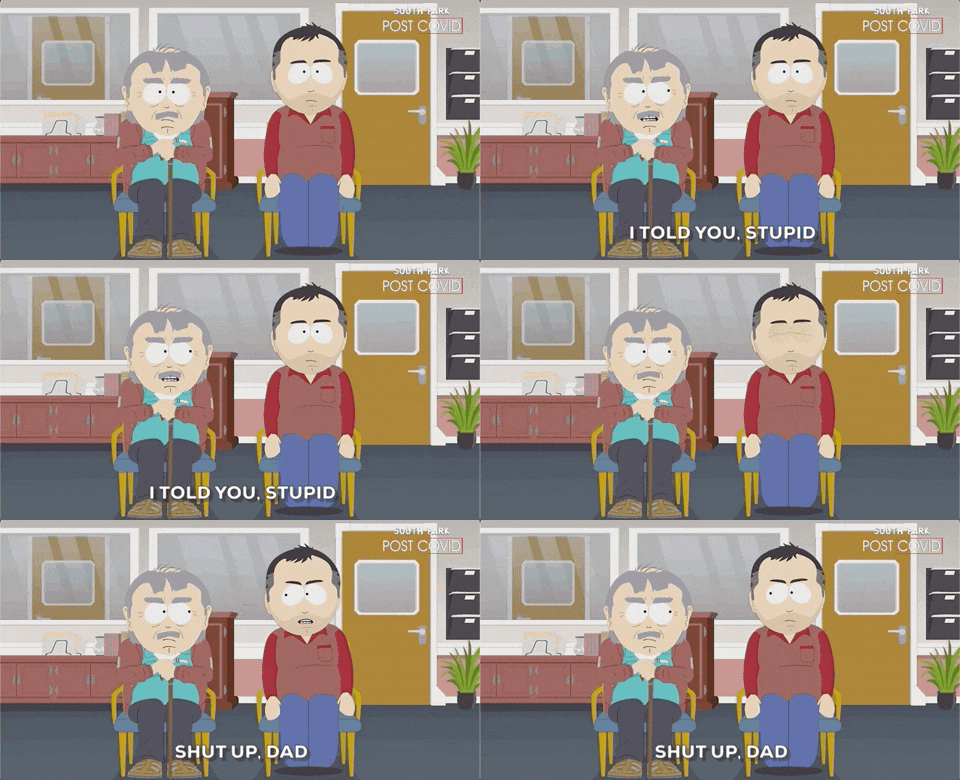
Rather than a list of the 10 worst South Park episodes, I’m calling this a list of the 10 “most” South Park Episodes. Under this descriptor, I don’t mean that they’re all not salient, hilarious, or fascinating. Even the most stomach-churning South Park moments illustrate a cultural boundary that’s not strong enough (for better or for worse) to avoid Stone and Parker’s prodding. Still, these episodes illustrate how South Park‘s worst indulgences are part and parcel to its brilliance, and vice versa.
10. Crippled Summer
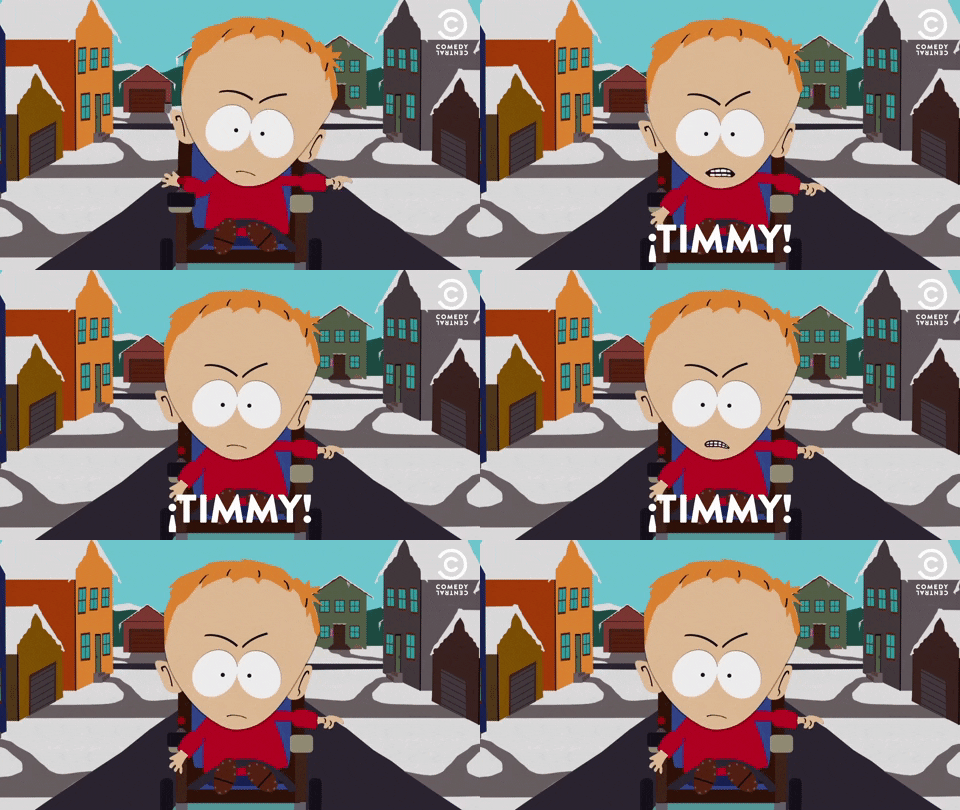
First aired on April 28, 2010, “Crippled Summer” sees the return of Towelie, a sentient towel deathly addicted to huffing chemicals. While the episode’s focus on Towelie’s Intervention-style recovery is undoubtedly funny, the episode’s B-story sees one of the most offensive depictions in television history. The episode shows the characters of Nathan and Mimsy, two developmentally challenged children whose dynamic is an homage to Looney Tunes characters Rocky and Mugsy. What ensues is one of the most brutally offensive 10 minutes in television history, in which the portrayal of mental impairment is blandly played for comic effect, ending in a shark assaulting Nathan. The specific air date of this episode is significant, as I’ll explain below.
9. Scott Tenorman Must Die
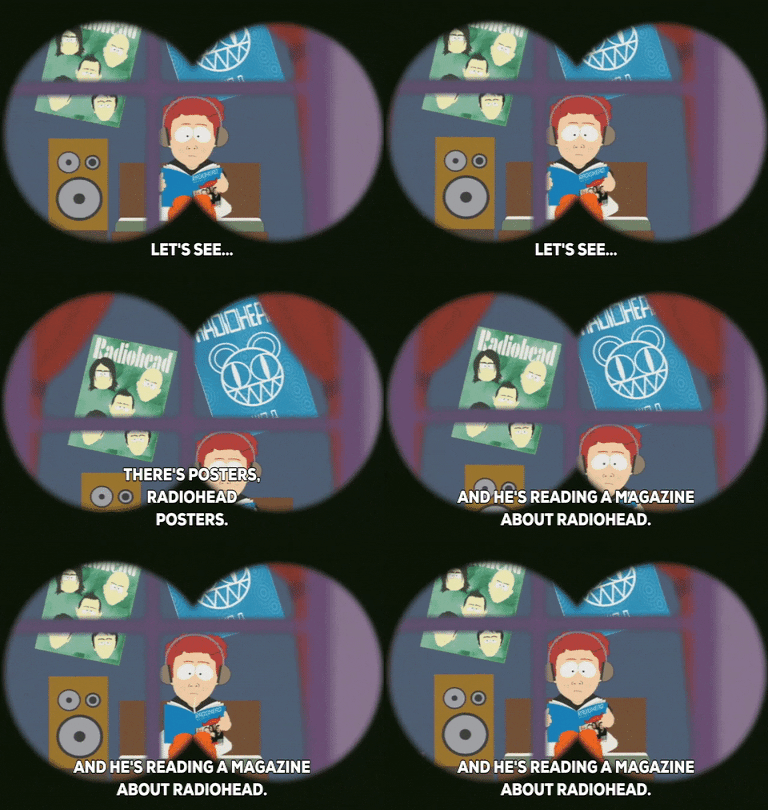
For a good part of its infancy, South Park flirted with its original conception as a pre-teen procedural. In this vein, the lives of the children, though constantly enveloped in baroque world events, had some threads of middle school realism. Drama was drama, neighbors were neighbors, and bullies were bullies. The most infamous bully in South Park‘s early seasons was Scott Tenorman, the sadistic 9th Grader who tricks Eric Cartman into purchasing a bag of his pubic hair.
It’s common knowledge that this episode was a turning point in the show. Not only does it introduce the uniform A-story that defines many of South Park‘s most unhinged episodes, “Scott Tenorman Must Die” climaxes with a cannibalistic, homicidal revelation that portends both Cartman and the show’s trajectory. Aside from all of this, my favorite aspect of episode is its portrayal of English rock band Radiohead, whose popularity at the time of release (July, 2001) was relatively novel in the States. Portrayed as dull, dimwitted milquetoasts, the Kid-A geniuses blithely disregard Scott Tenorman upon seeing him cry. This portrayal of Radiohead still feels fresh, and Anthony Fantano still kind of reminds me of Scott Tenorman.
8. A History Channel Thanksgiving
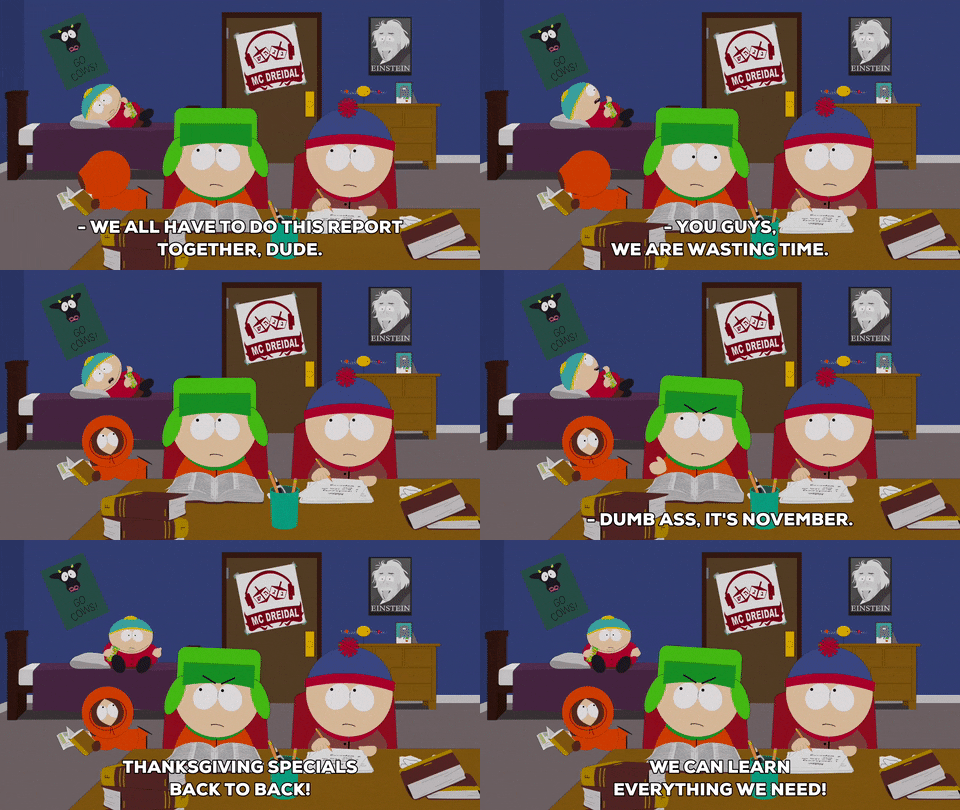
Airing on November 9, 2011, this episode depicts South Park at its most cutting, as well as its most misogynist. The boys are dismayed by a History Channel special that implies the involvement of aliens in the Pilgrims’ colonization of Plymouth. The “expert” talking head is a white man who claims 1/16th Cherokee ancestry. This part of the episode is a brilliant satire of “edutainment” television, something I’ve spoken to on Zillennial before. Yet the episode takes a turn toward the end as it parodies Thor, depicting Natalie Portman as she must “open her wormhole” in order to send a teleported Pilgrim alien back to his home planet. I get the joke. It just lands painfully flat.
7. 200 + 201
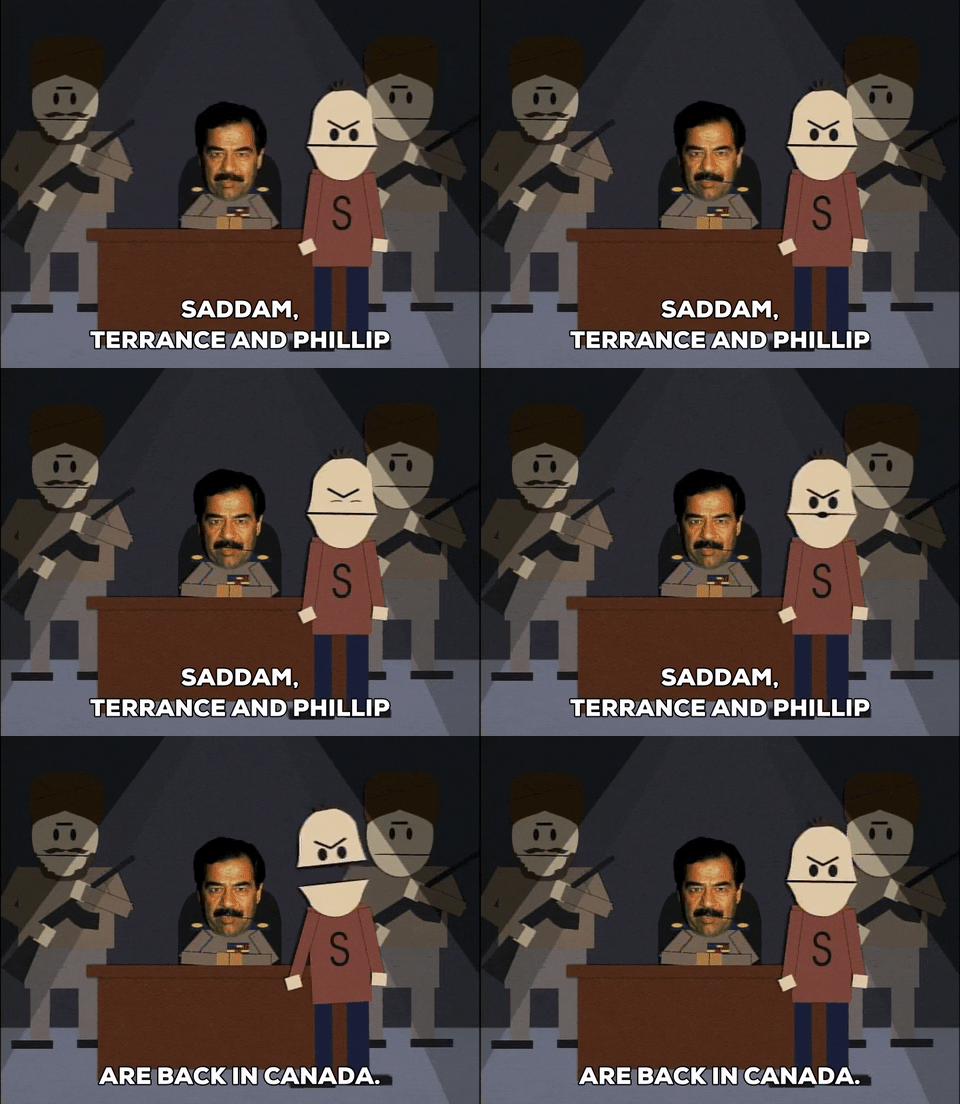
Infamously rescinded from most official releases after its airing caused massive backlash, the 200th and 201st episodes of South Park (named “200” and “201” respectively), saw major controversy upon their explicit portrayals of the Prophet Muhammed. The episodes gained so much notoriety that they were implicated in a failed Times Square car bombing in 2010. The site of the failed bombing was close enough to Viacom to prompt speculation that the suspect attempted to kill Comedy Central executives in response to the South Park portrayal. This was almost definitely not the case.
Part of the furor over these episodes come from the explicit depiction of Muhammad. The Prophet Muhammad himself is portrayed (fleetingly) in the opening credits of several South Park seasons. Another aspect of the uproar is illustrated by the subsequent episode “Crippled Summer.” Critic Carlos Delgado poignantly pointed out that while “200” and “201” brought significant criticism, South Park‘s portrayal of mentally impaired people elicited much less of a reaction. Still, “200” and “201” remain some of the most influential moments in South Park‘s history, even as they remain scrubbed from most digital platforms.
6. Trapped in the Closet
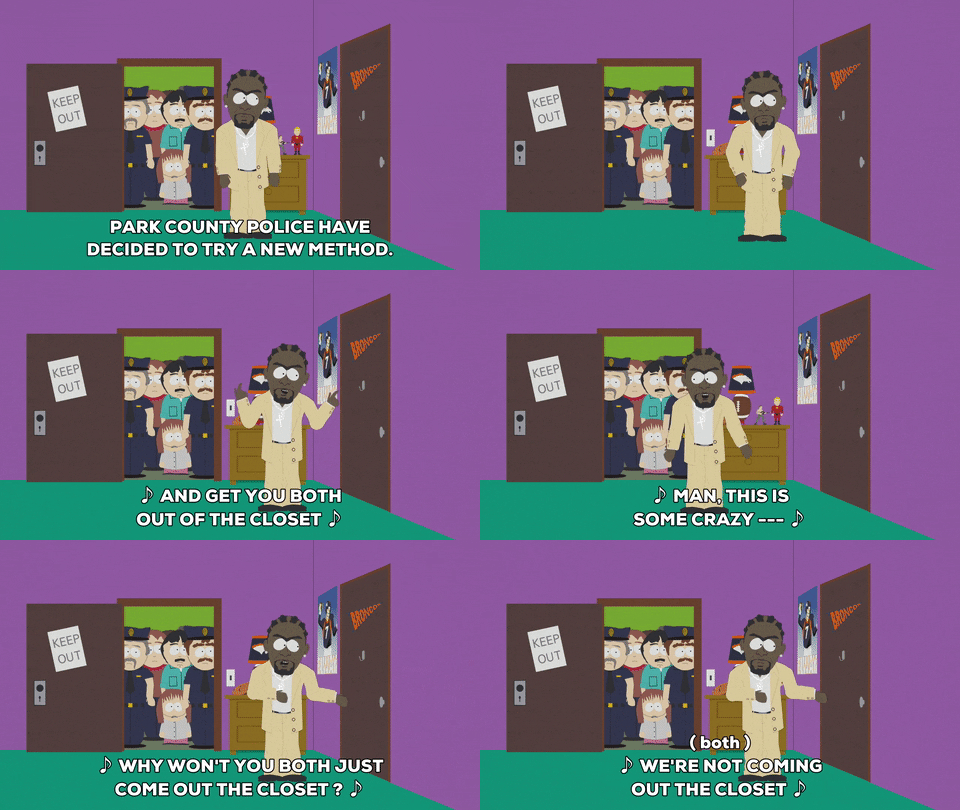
Taking some pretty awesome pot-shots at Tom Cruise and Scientology, “Trapped in the Closet” skewers Cruise’s Scientologist musings and his much-rumored sexual double life. It’s this latter part that grows tiring; the episode relies heavily on homophobic jokes and phrases. A classic example of South Park‘s punching-up-while-punching-down, “Trapped in the Closet” reveals the lengths to which Parker and Stone go in order to dismantle Hollywood elitism. This take still feels relevant.
5. Board Girls
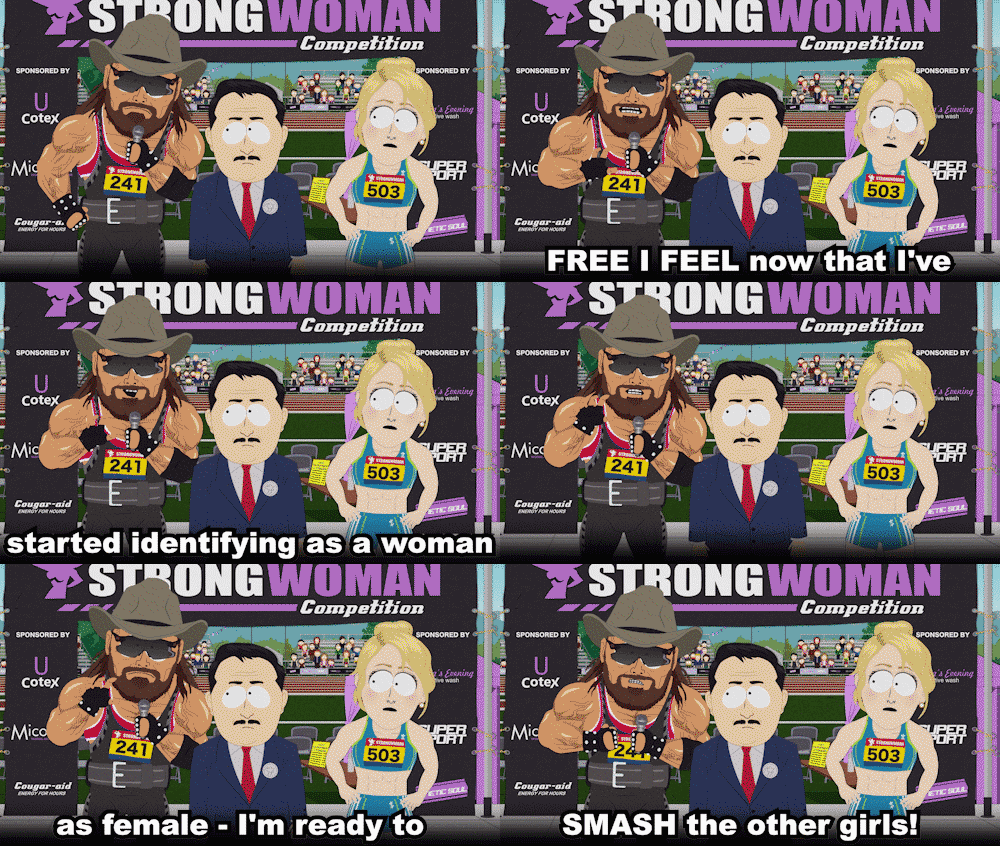
Yet painfully, many of South Park‘s points get bogged down in a lack of imagination. This is exemplified in Episode 7 of Season 23, “Board Girls.” The episode depicts a trans woman athlete who takes advantage of gender identification to enter a female sports competition which she easily wins. The episode is drenched in lazy transphobic rhetoric that feels more fitting on Bill Maher than South Park. Even at its most offensive, South Park usually displays a willingness to engage cultural narratives with which it disagrees. “Board Girls” feels like Parker and Stone read a headline, angrily internalized it on their commute to work, and spat out the episode arc in one go.
4. Manbearpig and Time to Get Cereal
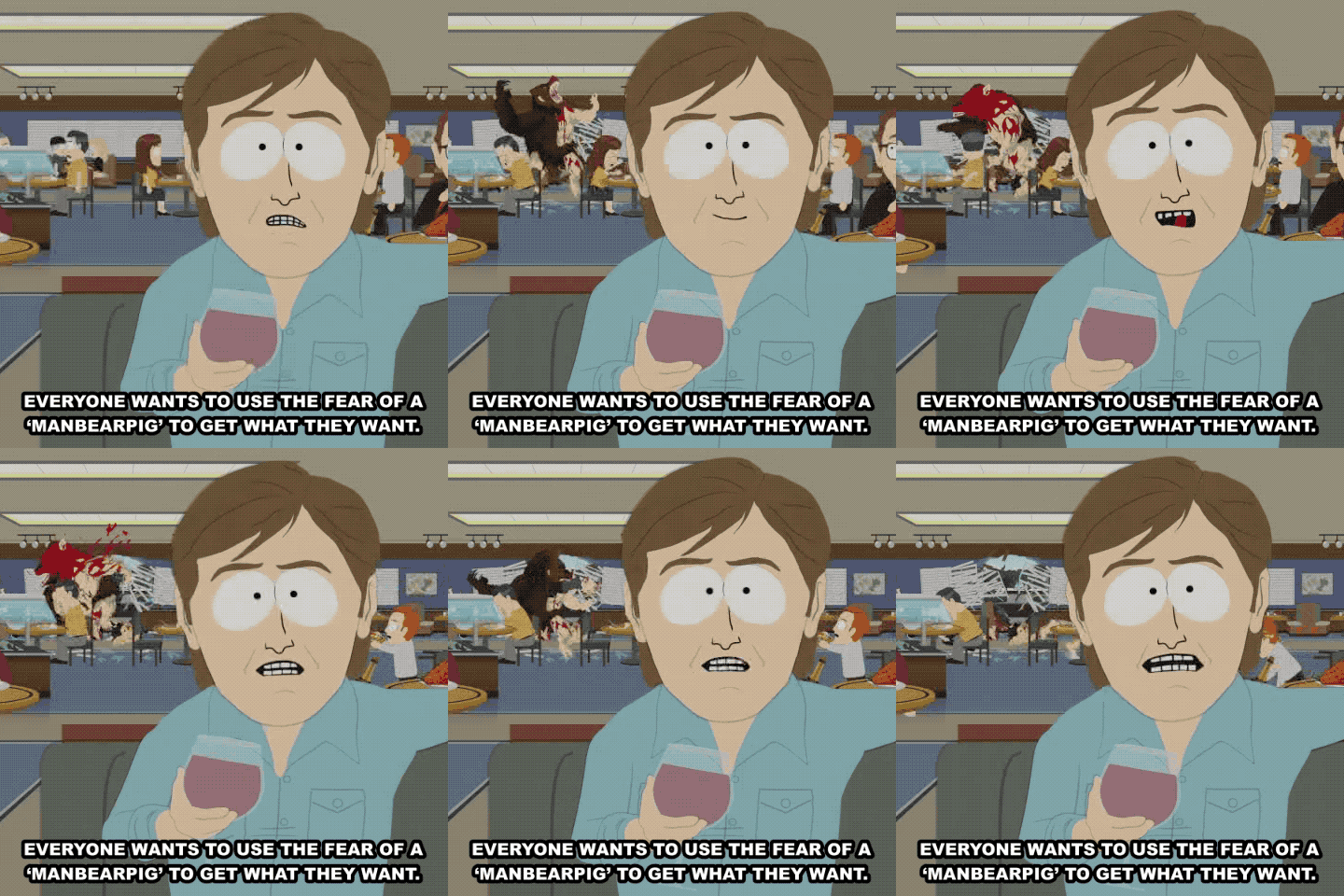
While transphobia, misogyny, and some pretty thick-headed racial stereotypes color a lot of South Park‘s legacy, Parker and Stone are often able to be reflective. A 2006 episode entitled “Manbearpig” poked fun at the then-popular film An Inconvenient Truth. Portraying former vice-president Al Gore as an unpopular kid without a lot of friends, the kids have to indulge Gore’s fantasy about a mythical being that poses a danger to humanity.
Infamous for its climate denialism, this episode was referenced by South Park 12 years later in “Time to Get Cereal,” in which the boys offer a sincere apology to Gore for not taking Manbearpig seriously, now that it clearly threatens the town. “Time to Get Cereal” is emblematic of South Park‘s ability to reflect upon larger cultural shifts, even using its own vocabulary to illustrate those personal and societal changes.
3. The Pandemic Special
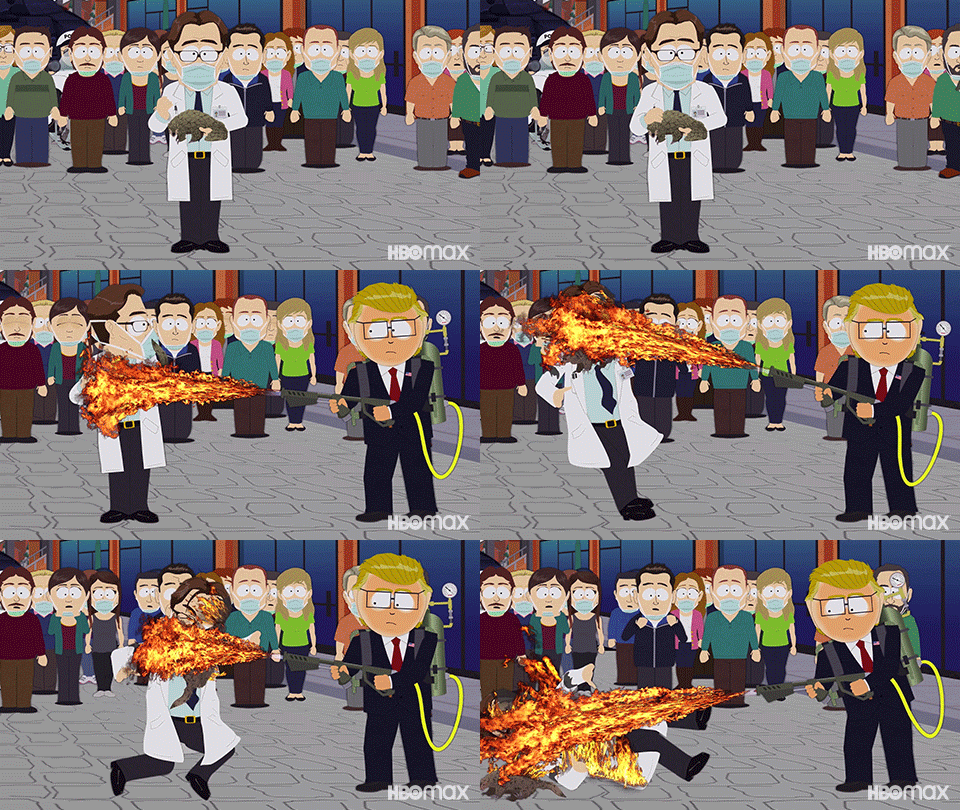
Some of South Park‘s work in the last ten years has been spotty. Grossly antiquated in one moment and incisively coherent in the next, the show has seemed to fall into a comfortable pattern of being its most exaggerated version of itself to varying degrees of success. One of these more successful moments was The Pandemic Special. Written and created in response to the onslaught of Covid-19, the special shows Stan projecting an air of emotional stability as he internally collapses under the stress of lockdown. A trip to Build-A-Bear workshop, one tiny morsel of a comfortable, consumerist world that feels safe, is cut short when a newly militarized police-force turn up at the shop.
Shortly before Randy arrives with a pangolin that holds the key to the vaccine (one of South Park‘s best bits, I highly recommend watching), Stan admits that he’s at the end of his emotional rope. “I just want my life back,” Stan admits toward the camera. It’s one of the most emotionally resonant moments in the show, and speaks to the feelings of pandemic-era isolation more clearly than anything else I’ve seen (Bo Burnham only gets as far as tearfully admitting, “I’m not doing ok right now” in Inside.) This is undoubtedly South Park at its best.
2. Miss Teacher Bangs a Boy
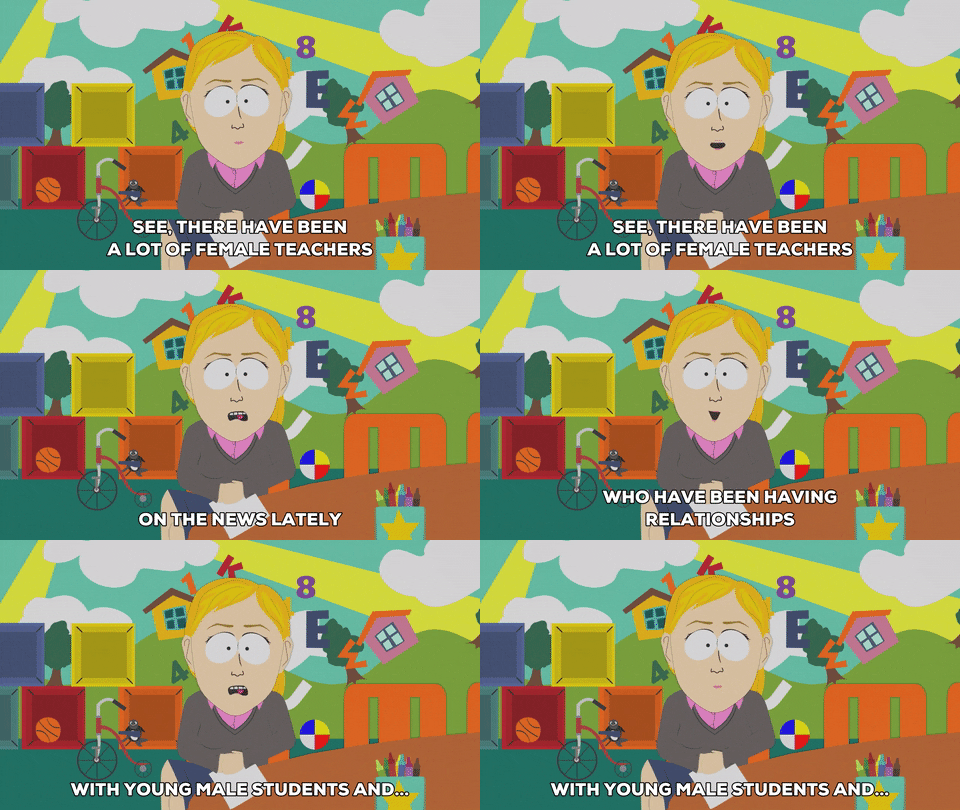
Now onto South Park at its… most again. More than 15 years before Natalie Portman (coincidence!?) portrayed an actor playing a femme sex offender in May December, South Park took that notion and ran with it. When Kyle’s little brother Ike begins a relationship with his Kindergarten teacher, it’s up to Cartman (in a getup mocking “Dog the Bounty Hunter”) to bring justice where law enforcement’s failed.
While these moments of bounty-hunter-bashing are certainly funny, the best moments of the episode arise from Kyle’s failed attempts to explain to male authority figures around him why his brother’s relationship is inherently abusive. The dismissive attitudes of these adults are put on display to show the double-standards in understandings of abuse; attitudes that reflect misogynist and puritanical values.
1. Back to the Cold War

South Park is no stranger to using its platform for the espousal of Parker and Stone’s musings on life. The Season 15 episode “You’re Getting Old” used the monotony of American suburban life to illustrate the death of childhood (and also introduced me to Landslide by Fleetwood Mac, so thanks, guys.) The Season 12 episode “The Ungroundable” ends with Butters coming to the realization that none of life’s worst moments can come without its best moments.
Season 25’s fourth episode, “Back to the Cold War,” is no different. Parodying the rise in global military tensions following Russia’s invasion of Ukraine, “Back to the Cold War” sees Mr. Mackey revisiting his 1980’s glory days as an anti-communist. The episode culminates in one of the most tender moments in South Park‘s history, in which Mr. Mackey reveals his political anxieties to his mother. He longs for the simpler days, “There was a good guy and a bad guy, we all sort of came together and loved our country.” In an empathetic response, Mackey’s mother (after some colorful talk about erectile dysfunction) claims that “Those times weren’t better. People were scared. People died.” When Mr. Mackey exhibits shame for seeking a simpler time, Mr. Mackey’s mother responds, “It just felt good cause it was familiar. That’s just sort of what us old people do.”
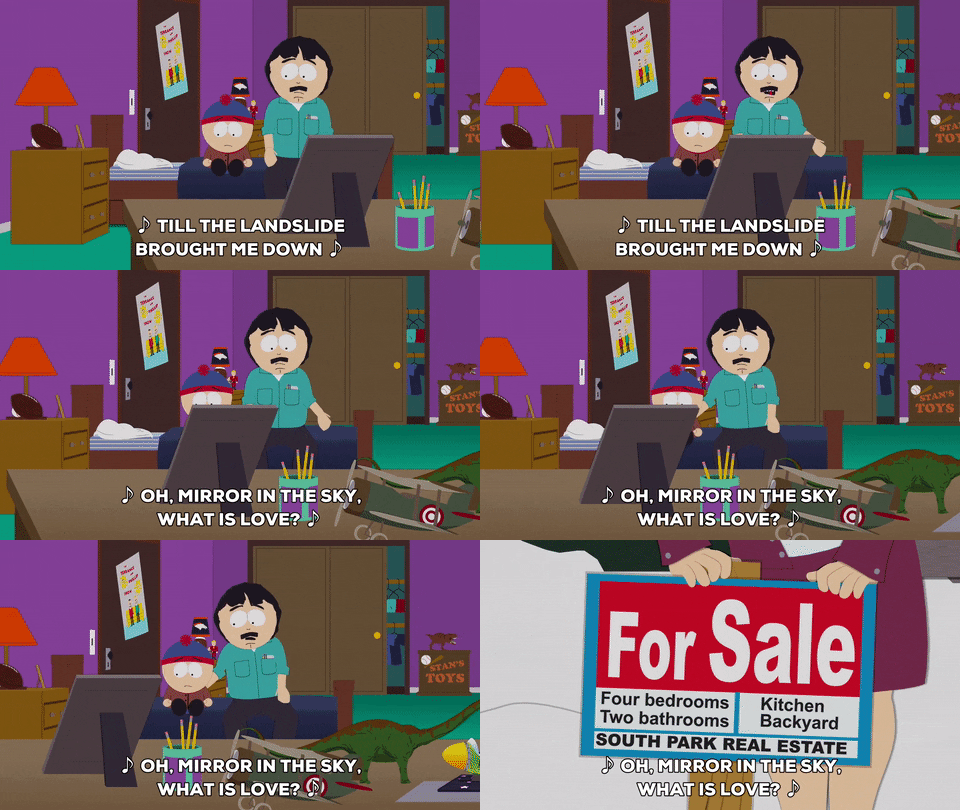
Though it may not be purposeful, I do take this sentiment to signify a lot of South Park‘s self-awareness. Parker and Stone might have arisen at a time of heightened anger toward perceived political correctness, they might have imbued their wonderful hatred of the elites with more personal hatred of ideals that those elites opportunistically latch onto. In their holy war to prove that not much is really sacred, they’ve shown a willingness to ridicule those seeking protection and careful, thoughtful discourse. This is where South Park ages poorly. Parker and Stone also show a fully compassionate understanding of people, society, and how the common good can coalesce even in the face of the most abject forms of evil (Eric Cartman.) Their tightly-wound television narratives often culminate in surprising doses of wisdom.
A couple of years ago, I read a New York Times artistic retrospective that referred to South Park as “nihilist.” I’ve always had a hard time with this argument. This descriptor might make it easier to reconcile South Park‘s most vile moments with its most enlightened moments, but in both cases South Park is always trying to say something. In this, I find respect for all of what South Park does. Even when it harrowingly misses the mark, South Park‘s willingness to bare its ideology helps contextualize broader conversations. Even at its laziest, South Park “goes there,” rescinding any ostentatious veneer of civility.
I’m so happy that South Park is still “on the air.” I hope that Parker and Stone take it as far as they can. And with the state of the world as it is, I could really use Parker and Stone cheering me up about it, even if their words are coated in middle-aged myopia. Even if it is, though, something tells me that their forthcoming work will be great. I’m already looking forward to the inevitable South Park Palestine-Israel episode, the inevitable Biden-Trump rematch episode, the inevitable Bird Flu-as-a-post-Covid anxiety episode, the inevitable Fuck-Timothée Chalamet episode…etc. And yet, even if South Park ended tomorrow, I know that I’d be able to parse through all of these issues with a degree of self-certainty, that no matter what I thought about them, I could determine for myself how I felt. It’s a sense of inner trust in my humor, heart, and spirit that I credit Parker and Stone for helping to foster.
Do you have a favorite (or least favorite) South Park episode? What do you think are the 10 worst South Park episodes? Leave a comment below!


Leave a Reply