

As more and more movies are being released set back in historical time periods, these films are starting to have one thing in common that audiences have been going crazy about: iPhone face, also called smartphone face. But what is smartphone face, and what has it been ruining so many period pieces and book adaptations? Today, we’re going to dive into just that.
What is smartphone face?
A smartphone face is basically when an actor cast in a historical-based movie looks too modern to have actually lived during that time. They look like they know what Bluetooth is or look like they’ve definitely seen an iPad before. They don’t have the same classic features that these people once had, whether that be from plastic surgery or just basic human evolution. Because of that, they aren’t as believable as the characters, and it doesn’t matter how much makeup you put on them or what costume you put them in; you can’t erase those distinct features.
Smartphone face examples

One that I have seen literally everywhere when it first came out was the cast of “Daisy Jones & The Six,” which is supposed to be set in the late 70s. I love Sam Claflin as much as the next person, but he’s not fooling anyone with those veneers and cheekbones. I think he is a great actor but is more suited for modern and futuristic films. Not in movies like “Enola Holmes” and “Snow White and the Huntsman” where he is simply not believable as a Victorian gentleman or a 16th-century King. And the rest of the “Daisy Jones” cast isn’t much better and doesn’t quite pull off the look.
Speaking of Victorian England, one movie that really hurt my soul was when they cast Dakota Johnson to play Anne Elliot in Jane Austen’s “Persuasion.” Usually, I have enjoyed book-to-movie adaptations that have been done before, and really love Austen’s writing and stories. The 2005 “Pride and Prejudice” movie is a fan favorite, and Kiera Knightly has the perfect face for playing these Victorian characters. But Dakota Johnson was just unfortunately not the right person to play that part. It’s hard to describe exactly what the criteria are for these types of actors, but it’s more of a feeling you get when looking at them. For me, something about her eyes and voice really put me off when she plays that role.
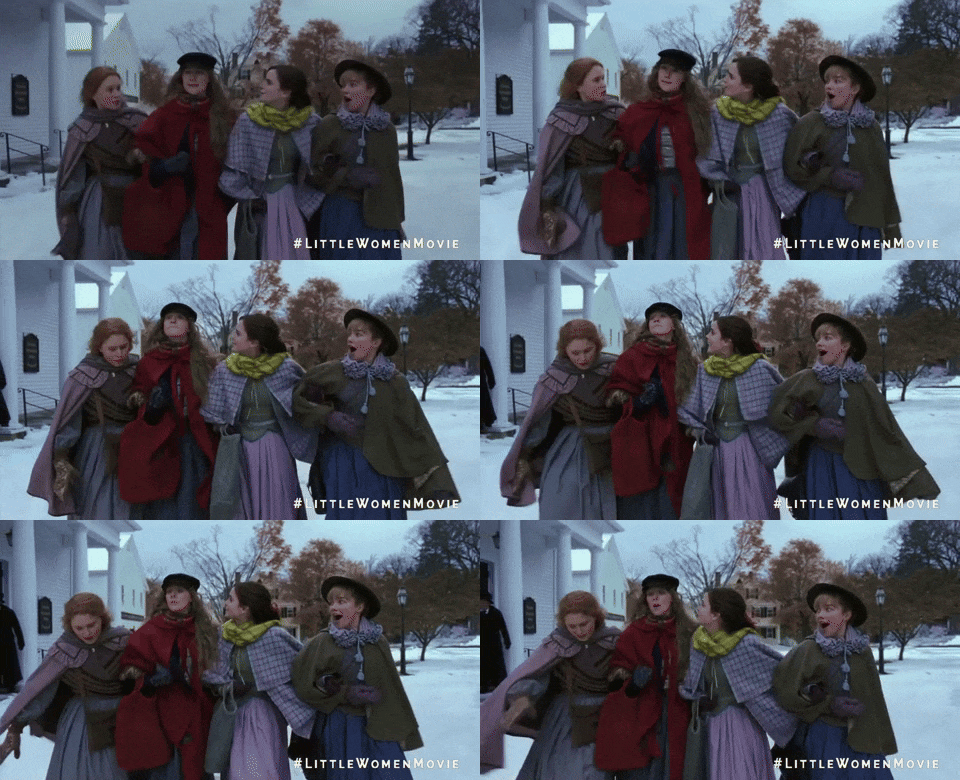
Another one that comes to mind is the 2019 “Little Women,” which has an even mix of believable actors and iPhone face actors. I think that Saoirse Ronan was absolutely perfect for Jo, and I loved her take on the character so much. She has many of the slim, sharp features I attribute to the character and looks like she could be from the 1800s. On the other hand, Florence Pugh just doesn’t. I think it is something with her eyebrows and mouth that are too modern-looking to fit the part. She is a gorgeous woman and one of my favorite actresses, but she definitely looks like she has a smartphone.
I’ve seen some people trying to put Timothee Chalmet into the smartphone face category, but I think I have to disagree on this one. To me, he has a French Victorian bone structure and is totally believable in “Little Woman” and “The King” and did really well in both of those roles.
But overall, I think the casting world needs to be more cautious of this type of thing, especially when you’re throwing people into 16th-century movies that look like Kim Kardashian. It ruins the magic of the movie, and audiences think they’re just watching someone playing dress up instead of actually embodying the character. There are so many talented actors out there with timeless features that are perfect for these roles, and they can’t just cut corners when it comes to casting.
What do you think of the iPhone face phenomenon? Do you agree with these smartphone face examples? Let us know!


Leave a Reply